Biswa Darpan Web Desk | Kolkata
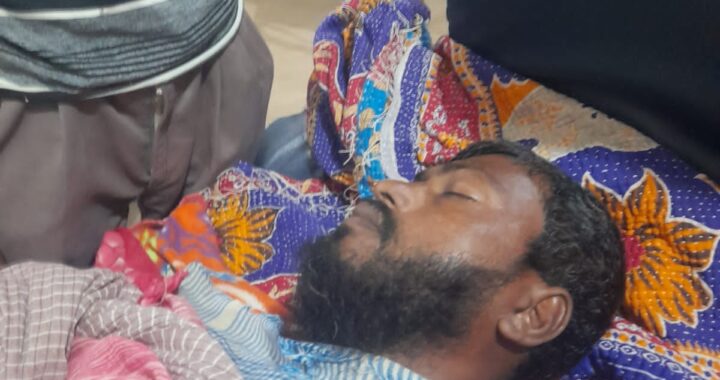
Dr Agarwals Eye Hospital, Kolkata, has successfully restored functional vision in a 51-year-old man who had lived with severely impaired vision in his left eye since childhood due to congenital iris coloboma, a rare birth defect in which a portion of the iris fails to develop completely. The remarkable achievement comes as the hospital celebrates 10 years of advanced eye care services in Kolkata, marking a decade of treating complex ophthalmic cases with cutting-edge technology and expert surgical care.
The patient had spent decades visiting several leading hospitals, where he was repeatedly informed that his condition was highly complex and that surgery was unlikely to restore meaningful vision. Apart from congenital iris coloboma, he also suffered from multiple abnormalities involving both the anterior and posterior segments of the eye, including phacodonesis (lens trembling), zonulopathy (weak zonular fibres supporting the lens), retinal abnormalities, amblyopia (lazy eye), and early cataracts in both eyes. These combined conditions made surgical intervention extremely challenging.
A specialized team led by Dr. Samar Sengupta, Specialist Ophthalmologist at Dr Agarwals Eye Hospital, successfully performed a customized series of daycare procedures, including Single-Pass Four-Throw (SFT) Pupilloplasty—an advanced iris reconstruction technique developed by Prof. Amar Agarwal—along with standard phacoemulsification cataract surgery. To address the unstable capsular bag caused by weak zonules, the surgeons implanted a Capsular Tension Ring (CTR), enabling safe intraocular lens implantation. Following the treatment, the patient’s vision in the affected eye improved dramatically from less than 40 percent to nearly 75 percent, allowing him to perform daily activities independently and regain a significantly improved quality of life.
Commenting on the successful outcome, Dr. Samar Sengupta said the patient had lived for decades believing that vision in his left eye could never be restored after being turned away by several hospitals. Following a comprehensive evaluation, the team developed a personalized surgical strategy to address the multiple abnormalities affecting the eye. He added that seeing patients regain both vision and confidence after such complex procedures is immensely rewarding for the entire medical team.
The hospital also highlighted another major success involving a 45-year-old homemaker suffering from bilateral high myopia exceeding –10.00 dioptres. Because her corneas were too thin for LASIK surgery, conventional laser vision correction was not an option. Under the leadership of Dr. Tanushree Chatterjee, Head – Clinical Services, the patient underwent Refractive Lens Exchange (RLE) with implantation of premium Multifocal/Extended Depth of Focus (EDOF) intraocular lenses. The advanced procedure permanently corrected her vision, enabling her to become spectacle-free for the first time in decades and significantly improving her quality of life.
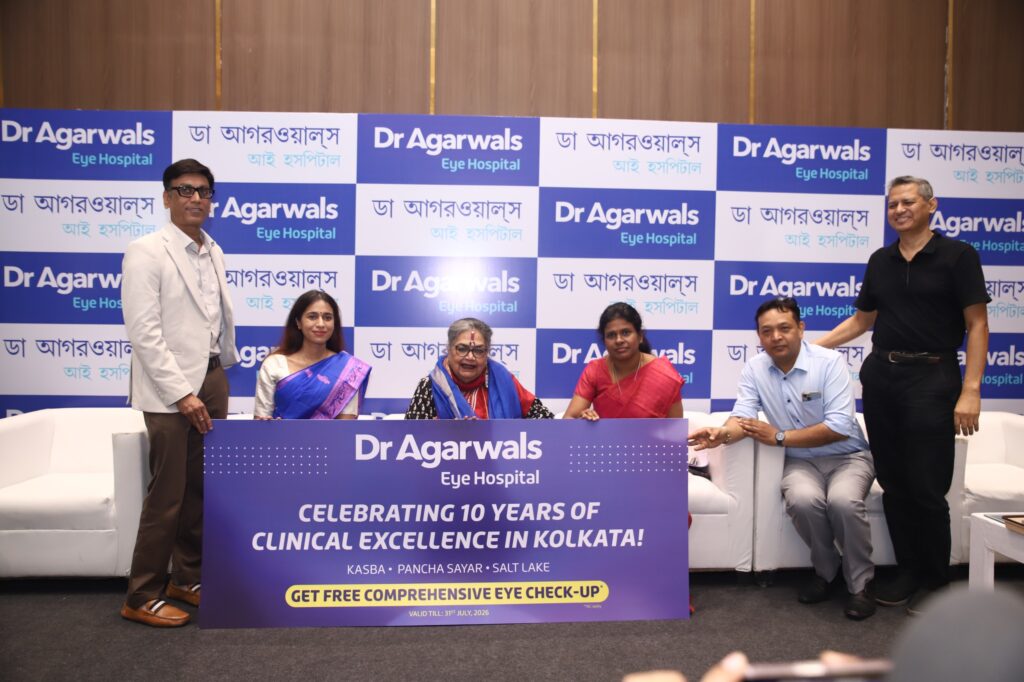
As part of the hospital’s 10th anniversary celebrations in Kolkata, legendary singer Padma Shri Usha Uthup attended the event and praised the institution for making advanced eye care accessible across the country. She said that rapid technological advancements have made eye treatments simpler, safer, and virtually painless, encouraging more people to seek timely treatment without fear.
Speaking on the occasion, Dr. Kaladevi Sathish, Zonal Head – Clinical Services, said the hospital’s decade-long journey in Kolkata reflects its commitment to delivering world-class eye care for patients with even the most complex vision disorders. She emphasized that successful treatment of conditions such as congenital iris coloboma and extreme refractive errors requires advanced technology, highly trained specialists, and a personalized approach to patient care.
Over the past ten years, Dr Agarwals Eye Hospital, Kolkata, has continued to strengthen its reputation as a centre for advanced ophthalmic care, successfully managing challenging cases and helping thousands of patients achieve better vision and an improved quality of life.